
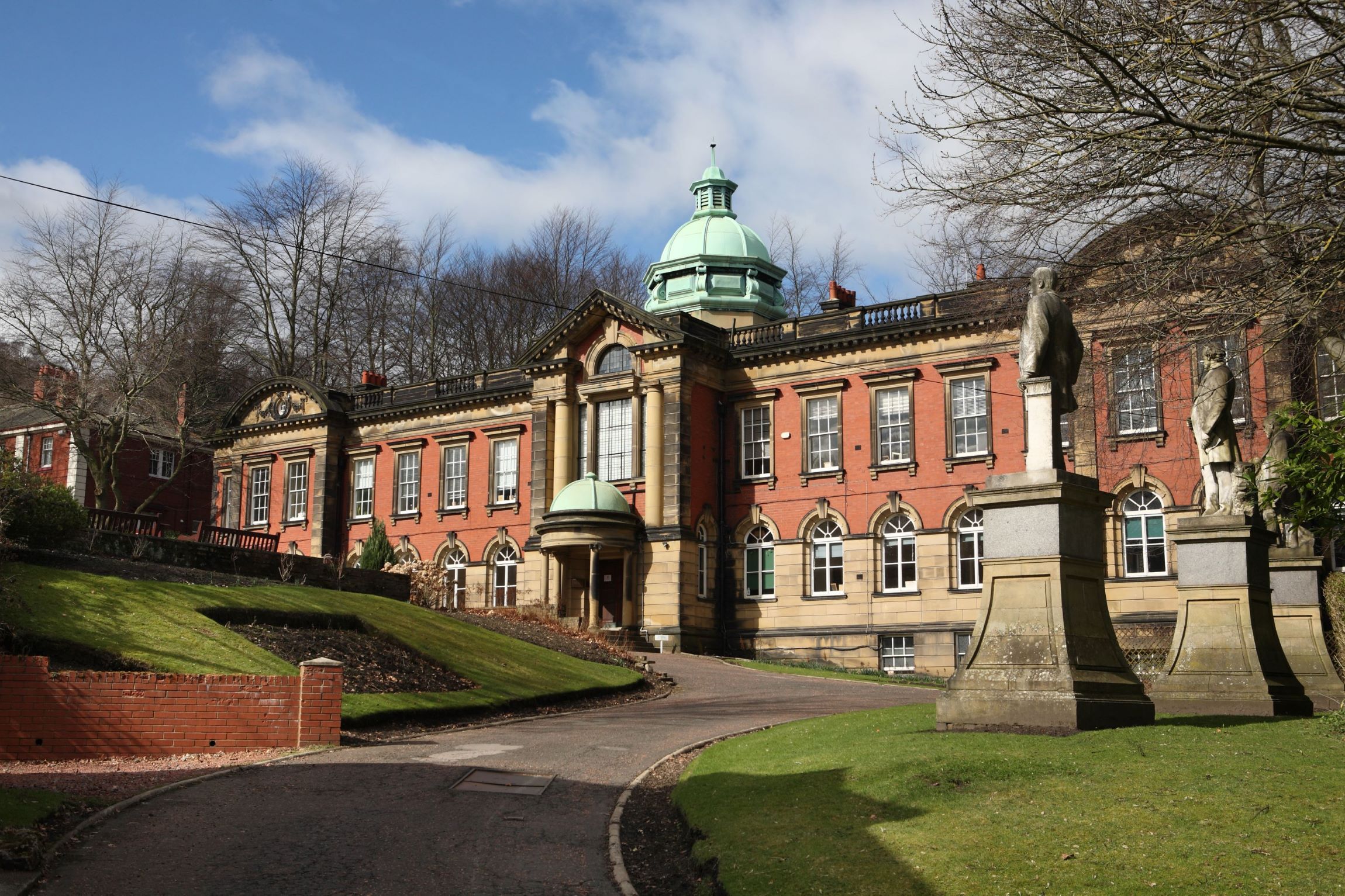
The reopening of Redhills Durham is a reminder of how Britain’s trade unions built their own networks of welfare, art and culture, writes Rhian E. Jones
Coalmining has played an essential part in shaping Durham. Beyond the county’s picture-postcard city, cathedral and university, the Durham coalfield was one of the largest in Europe, home to hundreds of thousands of workers from all over the world.
In 1869, these workers came together to unionise as the Durham Miners’ Association and, a few years later, established the Durham Miners’ Gala as an annual celebration of trade union culture and working-class life. From 1915, the union’s headquarters was the Miners’ New Hall, a grand Baroque-style building in the centre of Durham known as Redhills.
DEMOCRACY, DIGNITY AND SELF-RESPECT
Now Grade II-listed and included in Historic England’s “100 Irreplaceable Places”, Redhills was built to impress. Its construction began in 1914, funded through subscriptions from miners. A year later, the hall was complete as a place for assembly and debate, along with offices and housing for DMA staff.
Under a copper-domed roof, its interior featured white marble, gleaming tiles and oak panelling, with artworks showcasing the union’s history. The building’s centrepiece was the “Pitman’s Parliament”, a debating chamber with individual seats for each of the over 300 Durham collieries as their delegates had their say in the union’s decision-making. Redhills represented the pride, dignity and self-respect of mineworkers, and demanded the same respect from the bosses who profited from their labour.
A NEW ERA
After Durham’s last colliery closed in the early 1990s, the future of Redhills looked uncertain. With the end of mining as an industry, the union’s work and the building’s functions switched to continuing the annual Miners’ Gala and overseeing compensation claims for former miners who had sustained illness or injury while at work, while some of its offices were rented out to local charities.
In 2020 the Redhills charity, established to preserve Durham’s mining past, developed a plan to return Redhills to its former glory. A programme of renovation and restoration work began, funded by over £4m from the National Lottery Heritage Fund and match-funding from Durham County Council, combined with public donations. The project’s completion will see the hall reopen to the public this summer as a centre for local heritage, music and art.
WELFARE: HOW WORKERS LED THE WAY
This new era for Redhills draws on a long history – not only that of the building itself, but a broader legacy of institutions created by trade unions to supply their members with welfare, culture and leisure. Similar spaces – often known as miners’ institutes or workmen’s halls – stand dilapidated or in disrepair across post-industrial parts of the country, but they were once vibrant symbols of a strong, ambitious and organised working class.
Before Britain’s welfare state was created, people had only themselves and their communities to rely on when they became ill, unemployed or too old to work. But trade unions had the resources, the structure, and the will to step in and provide vital services.
Through membership subscriptions, they set up compensation funds for the families of miners killed or injured at work, built convalescent and retirement homes for ill or elderly miners, and arranged healthcare free at the point of use. This proto-welfare state later provided a model for the establishment of the NHS.
Alongside welfare provision, the halls and institutes that unions created – with members sometimes doing the construction work themselves – were centres for social life and self-improvement. They not only hosted political meetings but could house libraries, adult education classes, and even bars, cinemas and sports facilities.
NEW LIFE AFTER THATCHER
Today, after decades of deindustrialisation and underinvestment, the landscape of Britain’s former coalfields can look bleak. The decline of industry and the power of unions has meant the collapse of the particular forms of working-class culture and community life that they underpinned. But the revival of Redhills – now intended as a hub for culture, entertainment and democratic debate as well as heritage – is a sign that not all is lost.
Revitalising places like Redhills under the direction of local communities could be part of an alternative to the neglect of post-industrial areas by national government. Already an important reminder of what past generations of organised workers could achieve, these buildings also have something to offer the present and future of working-class people.