This summer saw more climate records broken. Riccardo la Torre says heatwaves, wildfires and other extreme weather have serious implications for firefighters and the public
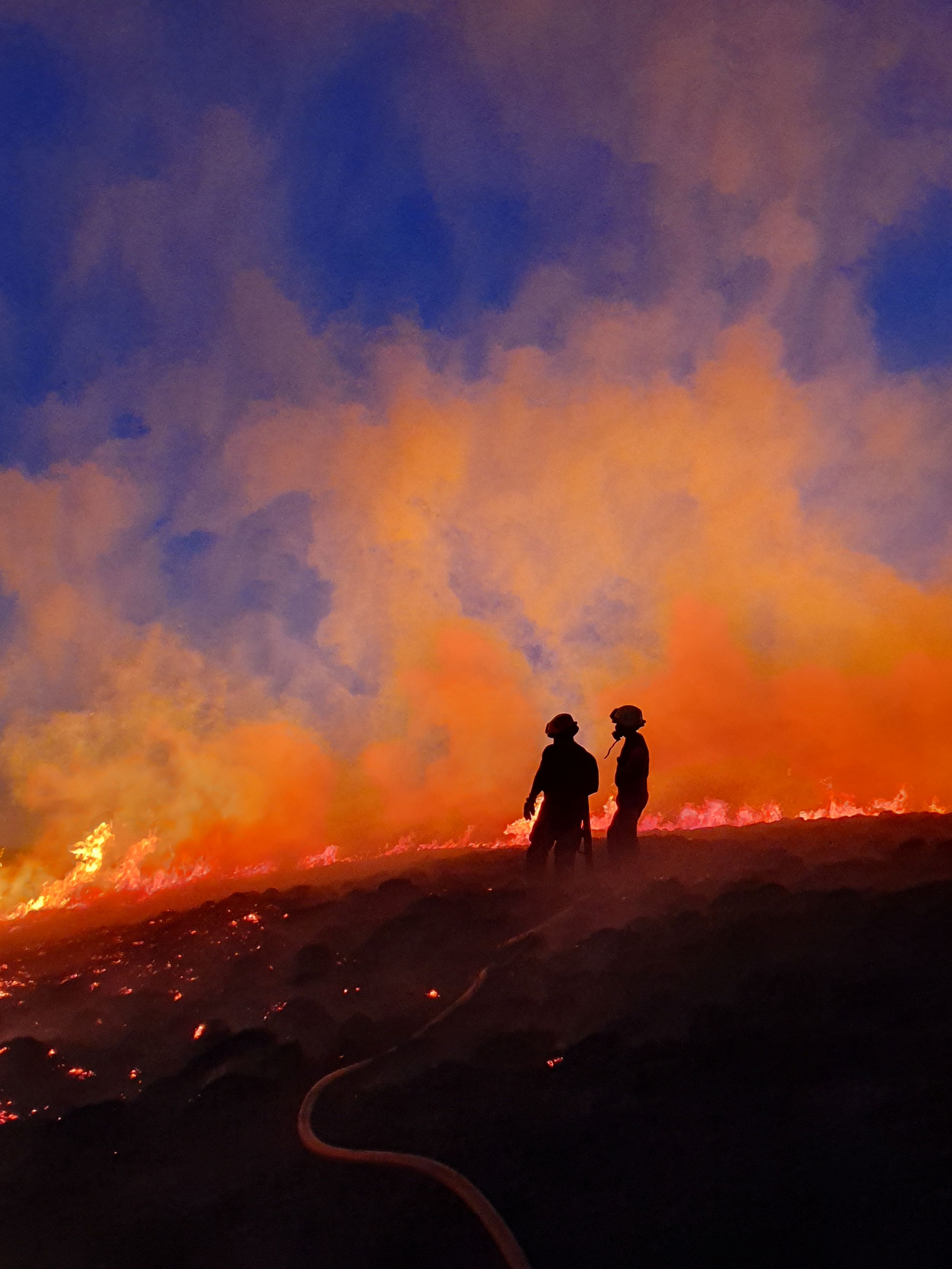
Firefighters face a cost of living crisis at home and a climate crisis at work. We are seeing, more than ever, homes, livelihoods and infrastructure lost, as wildfires now affect urban and rural areas.
Perversely we have witnessed firefighters injured and hospitalised in recent wildfires, while others call for backup that does not come, as fire appliances sit dormant in fire stations all over the country because cuts have left far too few firefighters to crew them.
We have even had reports of fire engines being used from fire museums as firefighters desperately battle without enough resources. Extreme weather events are a workplace issue for firefighters in the here and now.
The Met Office has confirmed that June 2023 was the hottest June on record for the UK. The average mean temperature of 15.8°C for June 2023 was the highest recorded since 1884, with England, Scotland, Wales and Northern Ireland also reporting their respective warmest June on record.
It seems every year, one record or another is broken when it comes to the weather. Both the actual record and climate models point to changing patterns now and for the foreseeable future.
IMPLICATIONS FOR FIREFIGHTERS
More extreme weather clearly has massive implications for firefighters and the communities we serve. The FBU is working hard to get ministers, fire authorities and chief fire officers to face these new risks and ensure the workforce, whether on the fire ground, in control or at training centres, are fully prepared and resourced to meet these challenges.
2022 was the UK’s hottest year on record, with an average temperature of over 10°C recorded for the first time in a 100 years
The UK’s current highest temperature is 40.3°C, recorded at Coningsby, Lincolnshire on 19 July 2022, according to the Met Office. This was the first time 40°C was exceeded in the UK. The record high temperature in Wales is 37.1°C, recorded at Hawarden Airport, Flintshire, on 18 July 2022. The record high temperature in Scotland is 34.8°C, recorded at Charterhall, Scottish Borders, on 19 July 2022.
Of the top ten hottest UK days on record, the top five have all been since the turn of the 21st century. Seven out of ten have been in the last 20 years.
The Met Office says that 2022 was the UK’s hottest year on record, with an average temperature of over 10°C recorded for the first time in a 100 years.
In addition, 2022 was also the warmest year on record in the Central England Temperature (CET) series. The CET began in 1659 and is the world’s longest instrumental record of temperature. The annual average for 2022 was 11.1°C. This is only the second time it has recorded 11°C or higher in its history (the other was 2014).
Every one of the top ten ‘hottest years’ on record have been recorded since 2003. By contrast, there has not been a top ten “coldest year” for 60 years.
The Met Office has made projections for the coming years. By the end of the 21st century, all areas of the UK are projected to be warmer. By 2070, if greenhouse gas emissions continue unabated, the average warming could be more than 5°C higher in summer and nearly 4°C higher in winter.
With future warming, hot summers like 2022 could become even more common by mid-century.
Hot spells, typically defined as maximum daytime temperatures exceeding 30°C for two or more consecutive days, are largely confined to the south-east of England at present. In the future under a high emissions scenario, the frequency of hot spells increases. Despite overall summer drying trends, new data suggests future increases in the intensity of heavy summer rainfall events.
The FBU has produced many publications on climate change. The latest is Scorched, a report on wildfire risks in the UK.
Firefighters are on the frontline in every heatwave and at extreme weather events throughout the year. The fire and rescue service needs to adapt to climate change already baked in from past carbon emissions, and prepare for further changes in the future.
INVESTMENT IN THE SERVICE
The primary demand is for central government investment in the fire and rescue service, to ensure sufficient firefighters and emergency control staff are maintained and expanded to meet the risks.
The FBU is campaigning for UK-wide standards and funding for training to tackle wildfires, including command and control training for officers. This should include:
■ Rural-urban interface firefighting training
■ Fuel removal/fire break tactics (such as prescribed fire) as part of emergency response
■ Heat, illness preparation and awareness training
■ DECON training to mitigate exposure to fire contaminants.
The FBU wants governments and fire authorities to invest in personal protective equipment and welfare facilities for firefighters tackling wildfires.
This should include research into firefighters’ health, safety and wellbeing, adequate procedures and facilities for DECON, body-worn physiological monitors, along with specialist PPE and respiratory protection suitable for the conditions.
Your branch copy of Scorched should be on your stations now to read or can be downloaded from: bit.ly/fbu-scorched.