
Issues facing retained duty firefighters – pay, crewing and the impact of more floods and wildfires – are the same as those affecting full-time members of the FBU – as RDS members told Will Stone
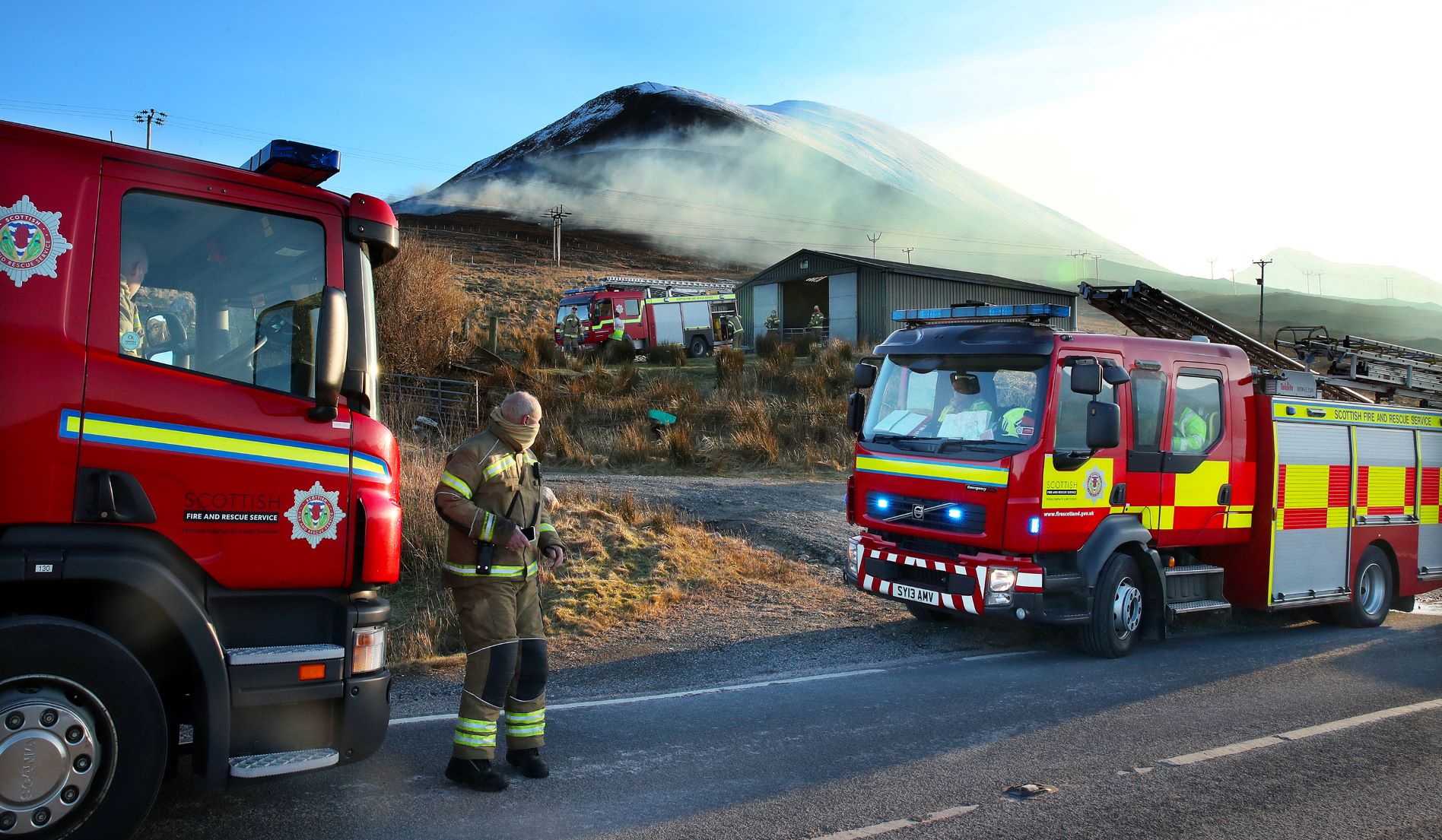
Photo: Courtesy of Willie Urquhart/WHFP
UK villages and towns are protected by an 18,000-strong force of hidden heroes. They might work in healthcare, education or hospitality by day, be students or past retirement age. But they are all firefighters providing essential cover through the retained duty system.
Mark Thexton, who has been an FBU retained rep for Crook in County Durham for 11 years, works as a warden for the local council. “I work on quite a busy retained station with about 300 plus shouts a year, other stations might only get 50 – but we need those retained stations just in case,” he says.
“Predominantly, we get calls to small rubbish fires, garden fires, house fires and rescue jobs. It’s rewarding but it can be extremely hard.”
Mark recalls that this summer’s heatwave and drought saw him and his colleagues working “day in, day out” all over the county on 11 to 12-hour shifts tackling grass and other wildfires.
A firefighter working on the retained duty system (RDS) will usually have agreed when they signed up to the number of hours they can be on-call.
They have received all the training of a full-time firefighter. So when they get that call to their pager, they leave their other employment behind and become professional firefighters.
Mark, who is on-call 110 hours a week, admits that it can be a “massive strain” on a firefighter and their family.
“When you’re on call you can be called up at any moment, so you can never really relax,” he says.
“It can affect your mental health and can affect people’s partners, as when the pager sounds, all they see is you going out the door, not knowing if you’ll come back in one piece.
“We won’t know the severity of the call-out until we get to the station.” But he says the real barrier to recruiting retained firefighters is pay.
“Pay is the massive one across the board, including full time,” Mark says. “I’ve always been a big advocate of the RDS, but people don’t realise how poorly paid we are.
“You could be on-call on Christmas day but only be paid 50p an hour. When people hear that, they’re shocked.
It’s not a job where you’re going to make a fortune, but you will make a difference
“The benefits outweigh the negatives.”
Steve Mattinson is a retained rep in Cumbria, based at Lazonby fire station, which gets around 60 to 70 call-outs a year, while nearby Patterdale station may only have 12.
Sometimes his crew can be at a fire for 20 minutes by themselves before the next pump arrives, due to the distance between fire stations, forcing very rural fire crews to think differently.
Steve says: “My view is to get a fire stabilised until the next pump arrives. But due to cuts, we are often left for long periods to deal with it by ourselves.”
He also recalls responding to big events like the Carlisle floods of 2015, when crews were there for 16 hours a day, helping to evacuate homes while whole roads were under water.
But he says the big issue for most rural areas is crewing. Weekends can particularly be a struggle as people want to get out, which you can’t do if you’re on call.
He says: “Retained is still a buzz. The retained up here is a big community thing, it’s hard to take that away.
“A couple have done 40 years, and some between 20 to 30 years.”
Sam Paul, a retained rep in Lancashire based at Earby, has had to rush away on a call-out just as he is about to speak to me.
He had to respond to a fire at a converted barn where the electrics went, gutting an entire wall.
“They overdid the wiring,” he says. “It was in a closet in the main door but it had gone up the wall and into the loft.
“Luckily Colne fire brigade were doing training drills nearby and arrived quickly to put it out.
“If they hadn’t been, the whole roof would have gone by the time we got there.”
Sam was a computer animator before becoming a retained firefighter and liked it so much he decided he wanted to leave his more sedentary job behind and go full-time.
THE HARDEST THING
He also says his area struggles with recruitment, saying: “The hardest thing is recruitment and keeping people interested.
“We compensate for less exposure with training. Earby is very proactive with training and drilling and does extra drills as much as we can.
“We’ve got fewer people working. During Covid, one local business closed down and we lost some of our retained staff, it was really sad.
“We do get recruits who leave because it’s too much of a burden on the family because the partner wasn’t fully on board. The job affects the whole family.”
Yet Sam has the last word on the strengths of the job: “At retained stations you’re a lot closer and more integrated with each other’s lives. It’s like a family.
“Most people who do it do it for the love of it. It’s not without its challenges but it’s changed my life.”