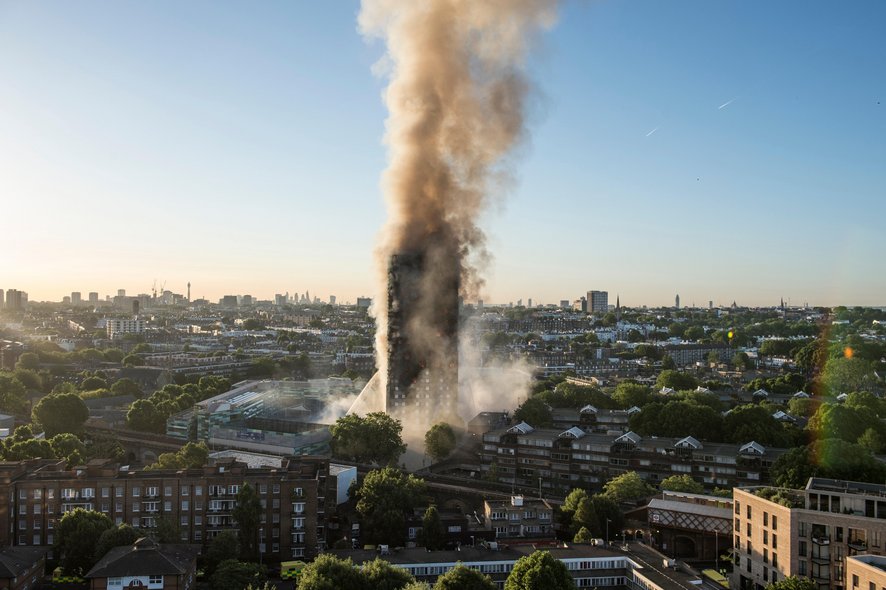
On 3 January, a team of world leading fire scientists published research on firefighter health that made headline news.
In black and white, printed on the front page of the Guardian, was a figure that was impossible to ignore: 1 in 4 firefighters who attended the Grenfell Tower fire are now suffering from health disorders.
This sparked a national conversation about the aftermath of the tragedy. But beyond the headlines, this story exposes an urgent need for better protections for UK firefighters.
Following decades of neglect, the government and fire service employers have no excuses left to hide behind.
ONE IN FOUR
The figures are shocking but, sadly, not surprising.
The University of Central Lancashire (UCLan) found that 136 firefighters who attended the Grenfell Tower fire are now suffering from long-term health disorders: 26% of those surveyed.
Respondents reported 301 health disorders in total, with many experiencing multiple health issues. These include 66 cases of digestive diseases, 64 respiratory diseases, 22 neurological diseases, and 11 cancer diagnoses.
The team of UCLan academics behind the findings included professors Anna Stec, David Purser and Richard Hull, leading experts in the fields of fire science and toxicology.
Professor Anna Stec described the results as concerning. “Although it is not possible to definitively trace any disease back to a single incident, it is alarming that a high proportion of the firefighters who were exposed to very high smoke levels that night are now falling ill.”
This is the first study of its kind. And since no-one had compiled data on exposures and the impact on firefighters at this major disaster, the FBU assisted with gathering crucial information.
In total, 524 of the 628 firefighters present in the initial 20 hours of the fire were included.
THICK, ACRID SMOKE
The scientists found that firefighters at the incident were exposed to smoke with gases and particulate matter at a far higher levels than the limit set by the Health and Safety Executive. Many experienced immediate symptoms including choking, difficulty breathing and vomiting on the night.
And, significantly, over three times as many firefighters who were exposed to smoke during the incident reported digestive and respiratory diseases in the three years following, compared to those who were not exposed.
Due to the severity of the incident, the frontline faced an unprecedented situation where operational safety protocols were difficult to follow. Many spent time in the tower without activated breathing apparatus, risking their health and lives while doing everything in their power to rescue residents. 89% reported not wearing respiratory protective equipment at some point during their activities.
This was the result of the tower having been turned into a death-trap by decades of deregulation. While the crisis in building safety continues to put high-rise residents’ lives at risk, unpredictable and dangerous buildings remain a threat to firefighter health and safety.
A CLEARER PICTURE
We know that exposure to fire effluents increases firefighters’ risk of developing cancers and other diseases over time.
Professor Anna Stec has joined the call for a health monitoring programme. “Given that firefighting is classified as a carcinogenic occupation by the World Health Organisation and is associated with higher mortalities from rare cancers, introducing regular health monitoring for UK firefighters is essential.”
In the years following 9/11, a lifetime health programme was set up for those who lived, worked or went to school in the area around where the towers collapsed, and for workers who participated for one day in rescue and recovery efforts.
While these firefighters experienced increased risk of diseases, regular screenings allowed for early detection and treatment. As a result, the majority of those diagnosed with cancer 5-10 years ago are still alive today.
Despite this precedent, no sustained health programme was put in place after the Grenfell Tower fire.
FAILINGS LAID BARE
Responding to the research, then health minister Andrew Gwynne told LBC radio that the government needs to “look seriously” at the issue and that it would be raised with the fire minister Diana Johnson.
What happened at the Grenfell Tower has implications for all firefighters, showing the importance of preventing exposure to smoke and the urgent need for health interventions.
In light of the latest findings, the union continues to call for a programme of health monitoring to be rolled out across the UK, and for all those exposed at the Grenfell Tower fire.
And FBU members have never had a stronger case for fighting for decontamination procedures, equipment and kit to prevent exposures to toxic contaminants at every fire station.