How a solid vote for strike action won an improved offer - and the FBU executives' recommendation
The weeks leading up to the publication of this issue of Firefighter have been dramatic.
On 30 January, FBU members delivered a historic mandate for strike action over pay. With a 73% turnout, 88% voted for strike. In Northern Ireland, the mandate was even stronger, with 94% voting Yes. The FBU was always clear: we wanted to avoid strike action if at all possible, and we held off from naming strike dates in the immediate aftermath of the ballot. Instead, we gave our employers 10 days in which to come forward with an improved offer. It was widely assumed by much of the media that the delay was symbolic, and industrial action inevitable. The union began to ready itself for a strike – the first nationwide industrial action on pay since 2003. On Wednesday 8 February, we met our employers at a meeting of the National Joint Council in Westminster Central Hall. Without any central organisation, dozens of FBU activists travelled from all over the country – from as far away as Inverness – to stand outside the meeting and wait for news. Negotiations dragged on late into the evening, and the result was only announced the following morning.
THE OFFER AND THE RECOMMENDATION
The improved offer is for 7% on NJC-negotiated wage rates and continual professional development (CPD) payments backdated to July 2022, and a further 5% from July 2023. There are no “strings” attached to the offer. The only additional content in the offer letter is positive: our employers have, for the first time, formally recognised the importance of key FBU demands around retained members, control members, pay progression and CPD. After extensive discussion, the FBU executive council unanimously recommended that members accept the offer. The ballot is taking place now both online and by post, and will close on 6 March. The union leadership is clear that it does not want to “sugar-coat” this offer. It is still a real terms pay cut for 2022, though may amount to a real terms increase in the following year as inflation falls. But it is a significant improvement on previous offers, and a real achievement for the union.
There are no “strings” attached to the offer.
HOW DID WE GET HERE?
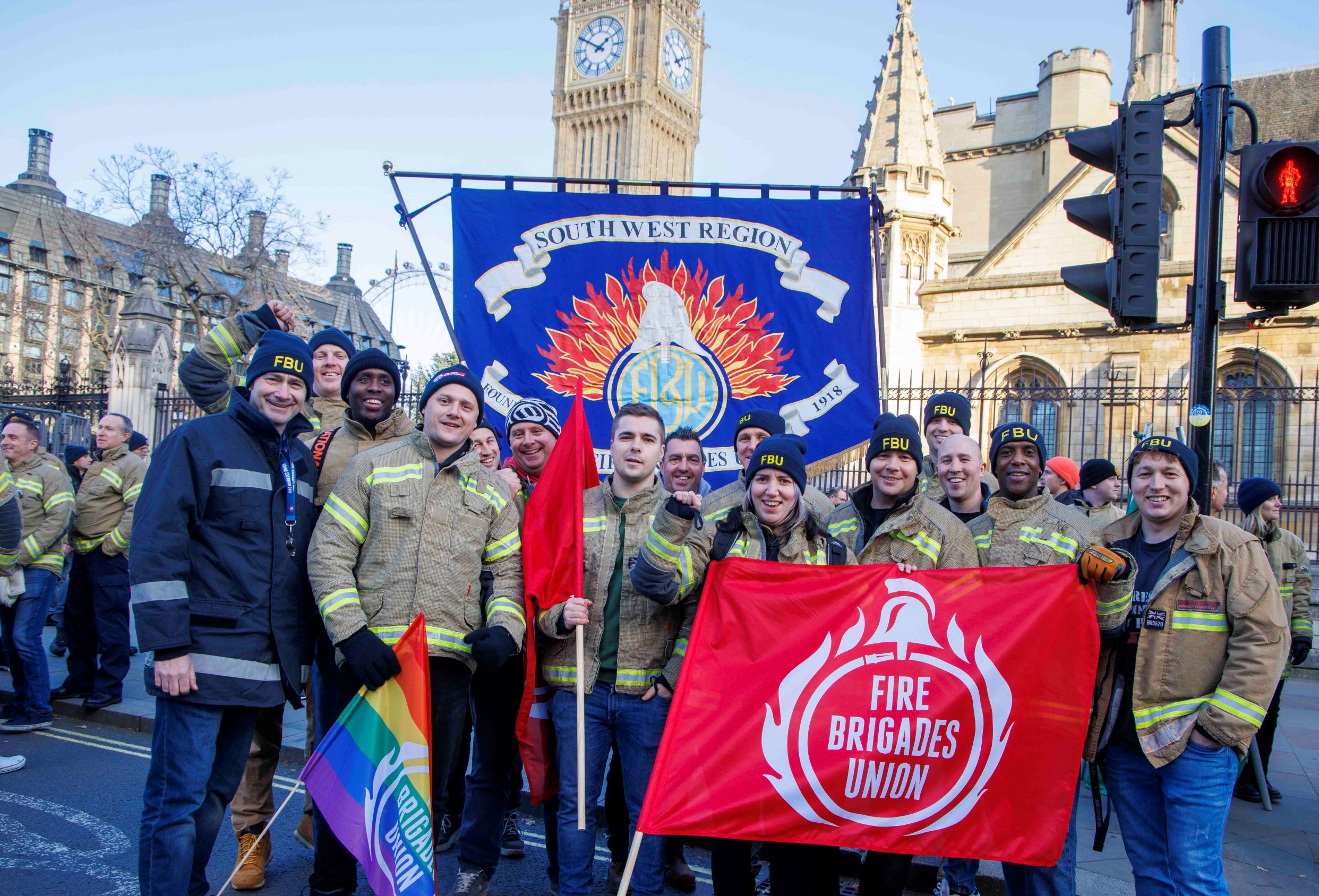
The government has shown that it will do everything in its power to make working people pay the price of the cost of living crisis, while the rich get richer. On 27 June 2022, fire service employers wrote to the FBU with an insulting 2% pay offer which we rejected. When a revised offer of 5% was made in October, FBU members overwhelmingly rejected that too via a consultative ballot. A ballot for strike action was launched on 5 December and ran until 30 January – a longer ballot period than usual to give more time for ballot papers to be delivered around postal strikes. Members rallied round – literally, with thousands of members travelling from all over the UK to a rally and lobby of MPs at Westminster – and delivered that historic yes vote. The solid vote for strike action was the crucial factor in getting the offer: we were serious and united, and the employers moved as a result.
THIS IS ABOUT THE FUTURE OF THE SERVICE
This pay dispute is the result of years of political choices that have undervalued, under-resourced and overworked our service. Brutal cuts have been made alongside increasing pressures and workload. While we are needed more than ever, responding to increasing flooding incidents, heatwaves and wildfires, we are paid substantially less than we were 10 years ago in real terms. Fire and rescue services across the UK are funded through a combination of Westminster government grants and locally raised revenue by fire authorities and boards (excluding Northern Ireland). Since 2010, central funding provided to local fire and rescue services has been cut. In England, the fire service now gets less than £1bn a year from Westminster. None of the UK governments have provided funding to address the issue of falling pay. The FBU has lobbied for increased funding for the fire service ahead of this pay round, and to an extent we have been successful. The offer we have been given – 7% for 2022 and 5% from July 2023 – can be funded by a mixture of central government funding, increases to local taxation and using reserves. However, these funding settlements do not undo the years of damage done by Tory rule.
WHAT CAN YOU DO?
We have fought hard to get this far. For now, the most important thing is make sure you vote in the ballot. The executive recommends acceptance of the new offer, but we are a union that values debate and discussion. Whatever your opinion, make sure you attend branch meetings and other forums and discuss the options with fellow members. If we reject the offer, we will be striking – and there will be a huge campaign of action. If we accept it, we won’t – but you should still make sure to be on picket lines in support of nurses, teachers, rail workers, posties, university staff and many other workers who are on strike: show your solidarity with them where you can.
Updated pay offer - 7% backdated to July 2022 5% from July 2023
RDS AND CONTROL
The employers’ letter includes commitments to discuss other issues which are important for the FBU – the pay of control and retained firefighters; pay progression; and CPD payments. This includes, in some cases, establishing a working group to explore, through the NJC, issues the FBU has raised. This has kept alive two vital elements of the union’s pay claim that address these issues for FBU members, issues the union negotiators refused to allow to be left behind. An opportunity of this kind has not previously been available to us.