When a watch in Cleveland faced a medical emergency on shift, their teamwork proved to be life-saving. Steve Morgan reports
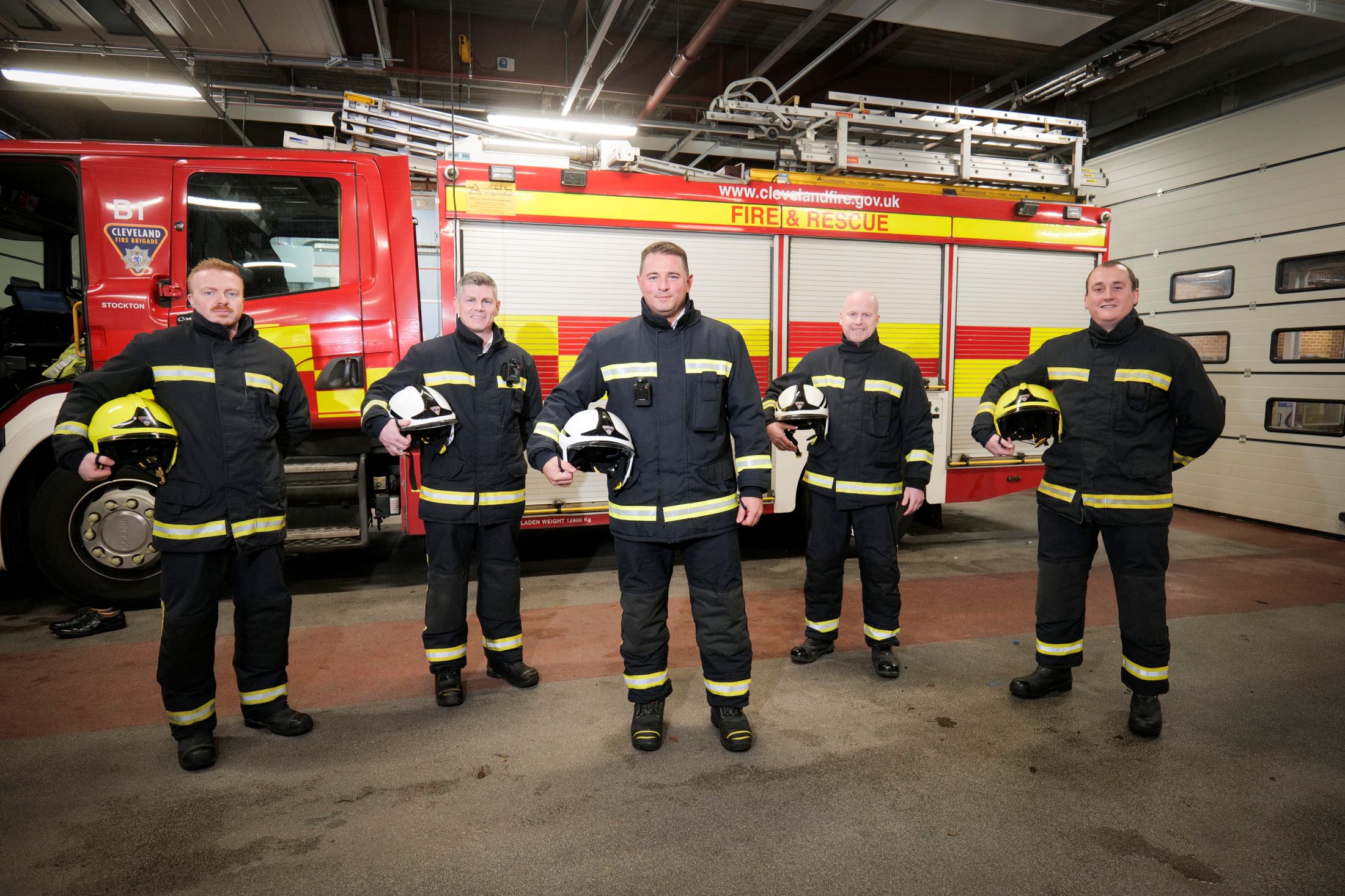
‘Safer, stronger, together’ runs the FBU mantra. For Alex Sutherland and his colleagues at Cleveland’s Grangetown Red Watch – laughing and joking as they shift seats, musical chairs style, so all can be seen and heard – the tightness of that connection is clear, even over a Teams call. Theirs is a bond for life – and certainly one that saved Alex’s life.
Out on call, attending what appeared to be a routine fuel spill from a truck now stuck on a bank, crew leader Alex suddenly collapsed: two undetected fluttering heart valves a ticking time bomb.
Alerted by the truck driver banging frantically on his cabin window as they worked on the other side of the truck, colleagues Adam Bell, Andy Spall and Paul Harforth found Alex face down. As Adam recalls: “He was actually with us for a little bit – but he didn’t know what had happened.
“Then, maybe over the course of maybe a minute and a half, his heart rate went from 140 or 150, just dropping – 90, 70, 60… Then he flatlined on us and started turning blue, which is obviously when we got the defibrillator out.”
THE LONGEST 14 MINUTES
“From starting it, I think we were on our own for 14 minutes. But that was probably the longest 14 minutes I’ve ever experienced.”
Of the trio, only Paul had previously done live CPR, but their training was sound. After a third shock with the defibrillator, the endless wait was over: Alex’s heart started beating again.
With Paul’s frantic ‘firefighter down’ radio signals sent out, the unit had by now been joined by a second crew containing Connor Temple (who’d joined the brigade with Alex), Josh Holmes, Stuart Charlton and Gary Flynn. Stuart recalled how their “blood froze” as the message came in. Thankfully, an ambulance arrived shortly after they turned up.
BACK ON THE RUN
Eighteen months and five operations on, Alex, who now wears an internal defibrillator to monitor his heartrate, is back at work full-time, and on temporary promotion as watch manager at Stockton. Not that he needs any invitation to return to Grangetown Community Fire Station.
While he has no recollection of the events that April 2024 day, he has checked the facts out.
“I looked on our incident log, and the time gap from the message coming in that I was in cardiac arrest and had started CPR, to the message that I was breathing on my own, was 33 minutes,” he says.`
He can recall his delirium when he came round from his coma. “I’d be on the phone going: ‘Right, what’s going on? Why am I here? Nobody will tell me anything and they’ve said this or that happened.’ I kept saying: ‘I need to go, I’m supposed to be on a night shift in two hours.’ They had to sedate me and keep me in bed.”
His colleagues smile, recalling the gibberish he spoke when they were able to contact him via Facetime in the mess room 48 hours later. “There’s also a picture of me – you all came to see me in hospital,” says Alex. “I’m sat outside the wagon in a wheelchair, I look a bit rough, and still to this day I don’t remember it.”
SAVED BY THE SHIFT
The fates were clearly on Alex’s side. With a resting heart rate still at 195 when he came out of his coma, his life was arguably saved by the fact that he’d only been at work due to a switch of leave arrangements – otherwise he’d have been home alone. Ditto Paul Harforth, whose knowledge and calm head proved critical.
The experience has only strengthened the group’s existing camaraderie. Now 38, Alex joined up 14 years ago this April, Paul is 20 years into his service, with Andy and Adam arriving at Grangetown five years back.
WATCHING OUT FOR EACH OTHER
Christmas, always a time to take stock, is approaching. The group laugh as they reject the notion of a festive-themed photo – “we can have a photo of us in the pub as Alex is buying us all a pint” is offered to much mirth.
There’s a tangible warmth, and a tacit acknowledgment that nothing should ever be taken for granted. Asked if he has anything to add, Alex, mostly happy to let his colleagues do his talking, outlines the tale of a firefighter who came to him with health concerns over his own heart palpitations – and the fact that they were all – including him – paid overtime for their efforts.
The members of both crews also received a service commendation for their ‘professional, heroic and prompt’ response. All in a day’s work, albeit one they will never forget.