....questions on kit, training, resources and shortages of firefighters are looming larger. Firefighters across the UK face a postcode lottery when it comes to levels of equipment and training for tackling a rapidly growing threat, writes Helen Hague
The warnings from the Met Office are stark. Wildfires, droughts and downpours will become more severe and frequent.
The heatwave that gripped Britain last summer – when a new temperature record of 40.3C was set “will be considered cool” by the end of the century.
And, based on events across the world, the UN secretary general now speaks of “global boiling”.
Firefighters are at the sharp end when wildfires break out. At a time of cutbacks and raging inflation, many are questioning whether UK fire and rescue services have the resources and training in place needed to meet the challenges ahead.
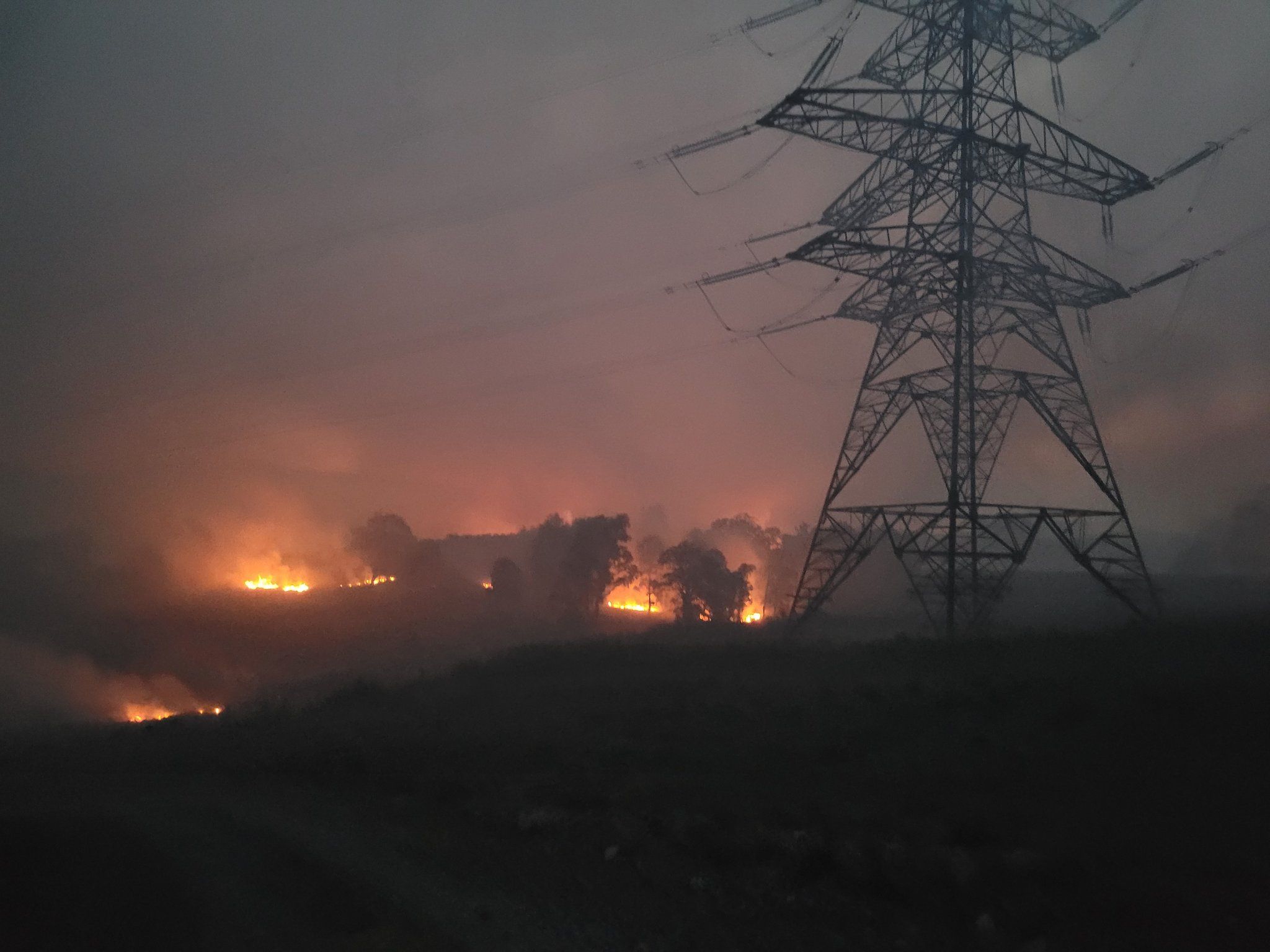
Scottish frontline firefighters were confronted by such challenges in late May when they found themselves fighting against the forces of nature as a massive wildfire took hold for weeks in scrub and woodland near Cannich in the Scottish Highlands – a wildfire that could be the largest recorded in the UK.
Plumes of smoke drifting towards Loch Ness were detected in space by NASA. Helicopters water-bombed the tinder-dry terrain and crews beat back flames on the arduous punishing shifts – in wildfire fire-kit issued to crew members just six months ago.
Will Burtt, the FBU’s Scotland North area organiser, is based at Elgin, the only full-time fire station out of 21 stations in Moray.
‘JUST NOT ENOUGH PEOPLE’
He is concerned about cutbacks, and the struggle to recruit and keep retained firefighters in the area – where the minimum contract is 90 hours a week and crews have to live within eight minutes of the station.
With the prospect of more wildfires, he fears “there are just not enough people”.
Davy Howe, crew manager at Grangetown in Cleveland, has worked at the station for 25 years. There have always been wildfires in the area, but now “the land is drier, and fires take hold quicker”. Highly combustible dried-out gorse bushes “can go up like petrol,” says Davy, who is the FBU brigade secretary in Cleveland and North East (region 3) treasurer.
Members are fighting fires with kit that is not fit for purpose – some do not even have proper firefighting boots for walking long distances over rough ground
When Saddleworth Moor caught fire five years ago, Cleveland firefighters went to help, “using beaters almost next to the flames” in “heavy, totally inappropriate” traditional fire kit.”
Crew members are “still fighting fires with structural fire kit on. It’s not fit for purpose. We don’t even have proper firefighting boots for walking long distances over rough ground.
“The union is always pushing for new equipment and the right PPE for the job.” And though crews at the station are seasoned wildfire fighters, they have had no formal wildfire training.
It’s a very different picture over at Greater Manchester Fire and Rescue Service’s (GMFRS) Littleborough station, where the newly set up burns team is receiving specific intensive wildfire training.
TRAINING IN SPAIN
Within the past year, all crew members have trained intensively in Catalonia, Spain – working in hot, tinder-dry conditions alongside wildfire experts with a world-wide reputation for excellence and innovation.
Burns team crew member Demi Efe, a frontline firefighter for over five years, relished the wildfire training in Spain, which included controlling wildfires through burning ahead of the flames – “fighting fire with fire”.
In highly physical training, the team used trench tools to cut through tough vegetation and, says Demi, GMFRS has now agreed to buy some of the tools used in Catalonia for the crew.
The team also attended an extensive debriefing session on lessons learned from last year’s widespread wildfires. Demi, an FBU health and safety rep involved in equality campaigns, now feels “better prepared” and “equipped to face the challenge of wildfires to come”.
Firefighters in Northern Ireland are among UK crews who have also trained in Catalonia. They have done so for the past decade, says Dermot Rooney, FBU regional chair and area manager. He reckons the Northern Ireland Fire and Rescue Service is quite well resourced when it comes to fighting wildfires. Every firefighter has a “wildland coverall”, and there is specialist equipment – though every day, at least 30 of the region’s 112 fire engines are off the run because of staff shortages.
Speaking to four FBU members from around the country, a mixed picture emerges of readiness to meet the wildfire challenges ahead. It is not a level playing field – more of a “postcode lottery” according to Davy Howe, who, alongside colleagues, is still fighting wildfires in not-fit-for-purpose traditional PPE kit.
Any government which takes the threat of wildfires seriously should surely listen to those reporting from the frontline – and, as the world heats, ensure the service itself is fit for purpose.