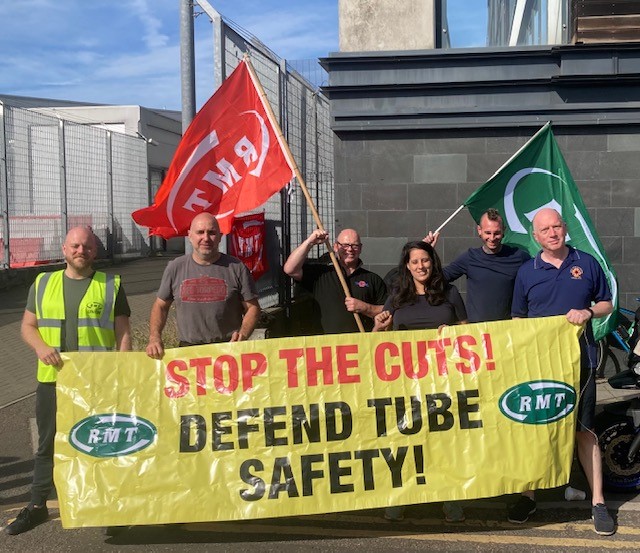
Mick Lynch, general secretary of the National Union of Rail, Maritime and Transport Workers (RMT) explains why transport workers are striking
RMT has been winning pay deals with some employers when they are not controlled by the dead hand of the Department of Transport and when free collective bargaining can take place.
However, due to this government’s intransigence, our union has been forced to take further strike action in the national rail dispute.
Make no mistake, this government wants to close ticket offices across the country, attack the safety-critical role of the guard and further diminish catering grades.
It wants to introduce seven-day working as mandatory in all train operators and impose new grading structures, salaries and roles on new entrants to the railway who will be working for less money and with no realistic prospect of pensionable retirement. Lower pay, longer hours contracts.
In other words, work longer and harder for less money
On Network Rail, the government wants a complete restructure of the maintenance function with fundamental changes to working practices, rostering, competency, organisation and other measures as well as productivity and technology measures for signallers.
Meanwhile, passengers are spending up to five times as much of their salary on season tickets than their continental counterparts, while the train operators’ profits go to seven groups owned by foreign state rail companies, meaning they will subsidise transport systems in France, the Netherlands, Germany, Italy and China.
The other 50 per cent of train operator profits will go to Go-Ahead and FirstGroup’s investors, mainly a group of 13 major asset management funds, some of which have holdings in both companies. Just last year, train companies paid out £800m to shareholders.
Transport services whether bus, rail or ferries, should not be cash cows for private investment funds, but public services democratically run in the interests of the taxpaying, travelling public.