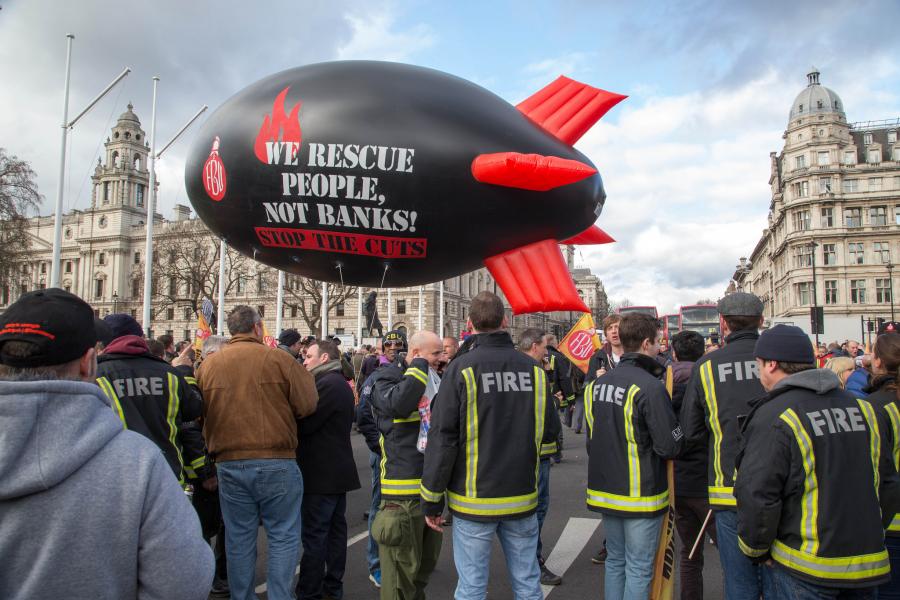
The government is swamping trade unions with crippling amounts of bureaucracy in an attempt to silence their critics, a House of Lords committee has heard.
The Fire Brigades Union (FBU) was one of several organisations who gave evidence to a Lords committee investigating aspects of the government’s trade union bill, which will abolish ‘check-off’ - the way a majority of members pay their unions subs - and severely restrict how unions campaign for their members.
Representing the FBU was its general secretary Matt Wrack who told the committee that the union was spending significant time and resources dealing with increased administration as a result of the bill, including hiring temporary staff members to administer the switch from check-off to direct debit.
“The (trade union) bill proposes an unreasonable administrative burden on trade unions and voluntary organisations. It aims to undermine those organisations in the public sector”, Wrack told the House of Lords Trade Union Political Funds and Political Party Funding committee.
Speaking afterwards Matt Wrack added: “The government are intentionally making it more difficult for trade unions to organise to protect our members working conditions. It’s as if they are trying to soften us up before another round of attacks on our pay, pensions and working conditions.
“Anyone who has ever benefitted from union secured rights such as paid leave, safe working conditions and equal pay should be outraged with the government over this anti-democratic legislation.
“The government know if we’re expending lots of our resources on the bureaucratic fallout of this bill then we won’t be able to fight as hard for our members.”
An impact assessment carried out by the government established that measures in the trade union bill, such as the abolition of payment of union subscriptions by the check-off system, will cost unions at least £37m over the next six years.
That figures is comprised of an £11m one-off cost for unions when the bill becomes law and another £26m in cumulative costs over the next five years. Other eye watering figures identified include a £6m bill to pay for running costs of the government’s official regulator of unions, the certification officer.
Appearing alongside Wrack to give evidence were representatives from the trade unions Usdaw and Nasuwt.