The Grenfell Tower public inquiry is set to publish its final report on 4 September, more than seven years after the disaster. FBU national officer Mark Rowe, sets out the union’s perspective
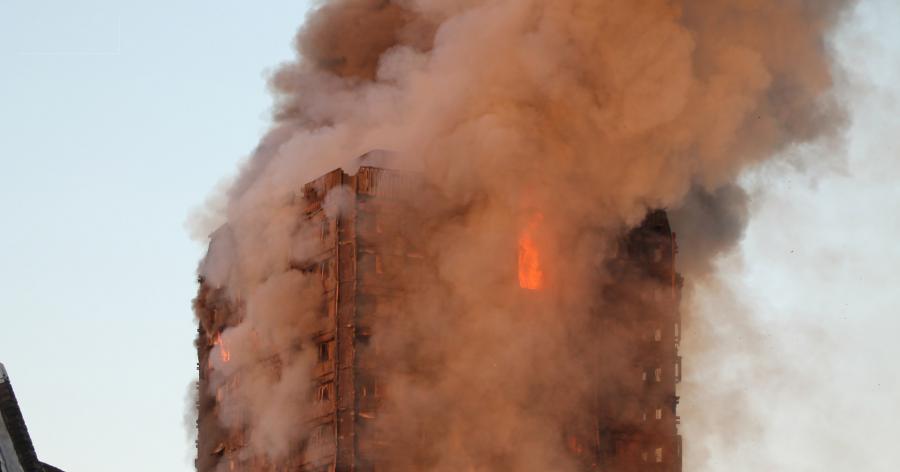
Never again. That was the sentiment after the Grenfell Tower fire on 14 June 2017, which cost the lives of 72 people, and injured nearly 900 residents and more than 100 firefighters. As the Grenfell community and its allies commemorate the seventh anniversary of the fire, the FBU continues to demand justice for Grenfell.
The Grenfell Tower inquiry (GTI) was announced by prime minister Theresa May within days of the fire. The terms of reference were set by central government. The inquiry divided its proceedings into phase 1, the events on the night of the fire, and phase 2, dealing with events leading up to it.
More than 600 people and organisations – including the FBU – were accredited as core participants. Phase 1 started in September 2017 and held 88 days of hearings. The GTI’s phase 1 report was published on 30 October 2019. Phase 2 involved 312 days of hearings, from January 2020 until November 2022. More than 300,000 documents were disclosed.
On 23 May, while the FBU was holding its annual conference in Blackpool, the inquiry announced that it would publish its long-awaited report on 4 September.
The rules of a public inquiry require that anyone subject to criticism is given an opportunity to respond before the report is published. This process has involved about 250 people. It has been a significantly larger and more complex process than the GTI expected.
One day before the publication date was announced, Rishi Sunak called a July general election. If the polls are reliable, the report will be released under a Labour government. The FBU participated in the GTI as are participant from beginning to end. The union made around 30 lengthy, written submissions, including formal responses in both phases and recommendations. The FBU’s objectives in the inquiry were to defend firefighters, hold politicians to account and get justice for the Grenfell community. FBU officials represented hundreds of firefighters, control staff and officers.
The FBU identified deregulation as the primary long term cause of the Grenfell Tower fire. Ministers deliberately weakened building regulations and fire safety over decades, which allowed construction firms to refurbish the tower block, downgrading safety measures. The walls, fire doors, smoke control, lifts and other failures were licensed by poor regulation and weak enforcement.
The FBU set the historical record straight. As early as 1999, the union warned ministers and MPs about the dangers of external cladding on high rise residential buildings, after the Garnock Court fire in Irvine, Scotland. In 2007, the FBU warned about the risks of the “stay put” building safety procedure and asked that it be examined after the Harrow Court fire in Stevenage, Hertfordshire.
The FBU opposed the Fire and Rescue Services Act 2004, which took away national standards, the advisory body and the inspectorate.
The union criticised the Regulatory Reform (Fire Safety) Order 2005, which removed fire certificates and weakened enforcement.
The FBU also opposed austerity cuts and privatisation imposed by central governments over decades.
The FBU hopes the GTI report will be hard-hitting and identify blame on the part of those at the top. But we are not counting on it.
The GTI started with the wrong terms of reference – letting politicians and chief fire officers off the hook. Starting with the night of the fire and then tackling the causes was the wrong way round. It meant the GTI hearings started and finished with criticism of firefighters, not the politicians and business people who were ultimately responsible.
The GTI failed to call leading politicians to give evidence. The three most culpable prime ministers – May, Cameron and Johnson – were never questioned, unlike in other public inquiries. The National Fire Chiefs Council was never called to account for its failures. The GTI appointed the wrong “expert” on firefighting – Steve McGuirk – who contributed next to nothing. And the inquiry should have called Matt Wrack to put the firefighters’ case.
The FBU hopes that the GTI’s report will identify the firms (and the directors) responsible. It would then be for the courts to decide on what to do with them. But the FBU also wants Westminster politicians and their advisors held to account for their role in creating the framework for the disaster.
If we are finally to get justice for Grenfell, it is ultimately ministers and their friends who must be held responsible.