The FBU’s executive council has announced a wide-ranging plan to tackle sexual harassment, following the publication of an independent report into the issue.
In recent years, scandals involving sexual misconduct and misogyny have rocked other unions, most notably the GMB, TSSA and Royal College of Nursing (RCN). Investigations into the fire and rescue service – including the London Fire Brigade’s independent cultural review, a report by the Inspectorate – and a raft of media reports have also highlighted discrimination, bullying and harassment in the sector.
FBU general secretary Matt Wrack said that it was clear that the union “would not be immune. We took the step of commissioning an independent report because we wanted to uncover the unvarnished truth, and because we are determined to combat sexual harassment in all its forms.”
The authors of the FBU report, which was published on 7 February, surveyed all women members and all black and ethnic minority members, alongside a random selection of others – 9,675 people in total. Of these, 1,128 answered enough questions to be included in analysis.
They found that:
- 30% of women members reported experiencing sexual harassment in an FBU context
- In 93% of cases, the perpetrator was a man
- Just 10% of women reported harassment to the union
- Social events were the most common venue for sexual harassment.
Robyn Richardson, secretary of the FBU’s national women’s committee said that “while the findings of today’s independent report are not surprising, they are sobering.” The FBU has now launched an “initial action plan”, which includes:
- Compulsory training for all brigade-level officials and above
- An annual equalities audit
- A statement to be noted at the beginning of all FBU events
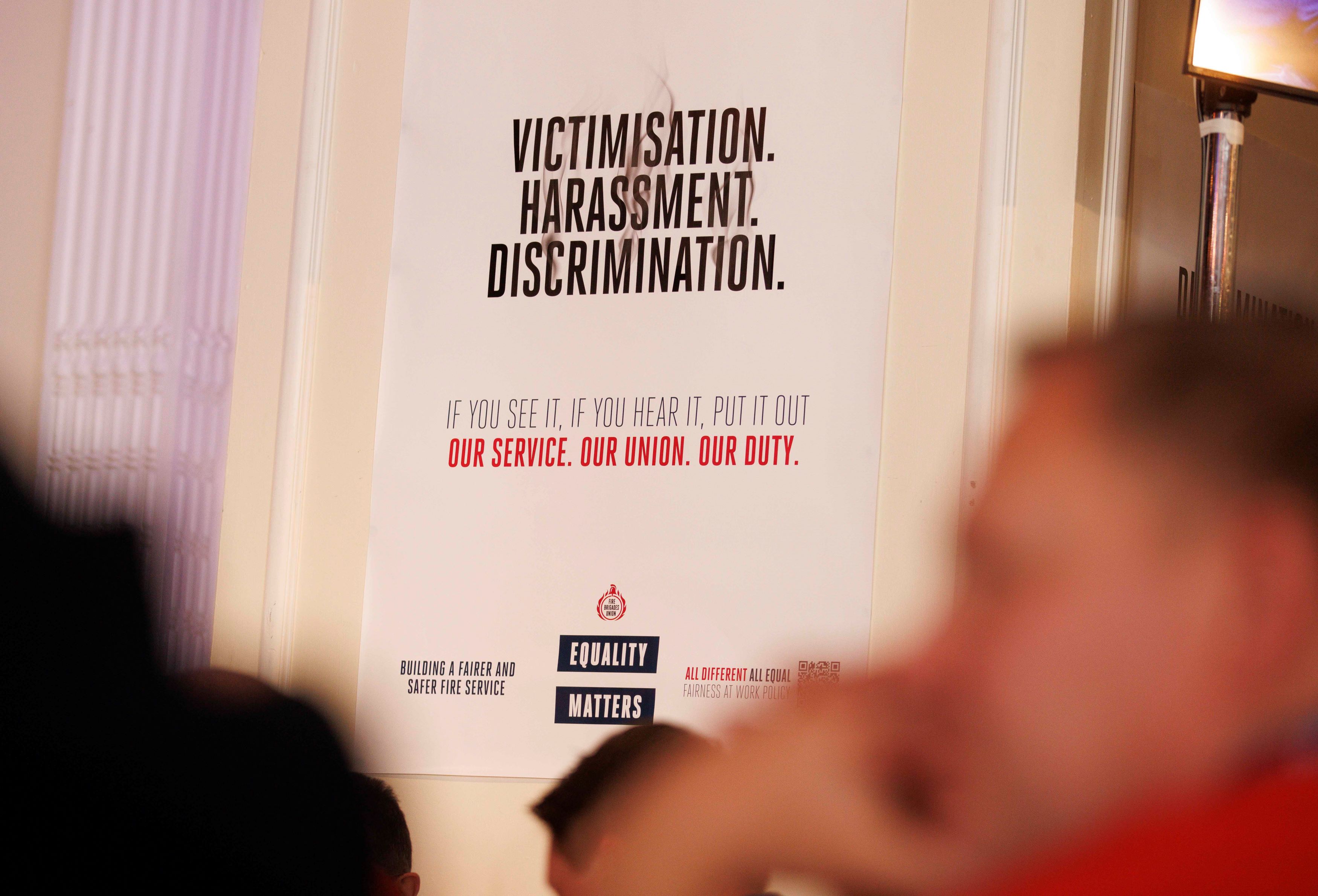
- More prominent advertising of reporting processes and support available to victims.
Matt Wrack said that the announcement was “a key moment in our campaign to root any sexual harassment out of the FBU and the fire and rescue service more widely,” and that the FBU “stands with the victims of this behaviour”.
We took the step of commissioning an independent report because we wanted to uncover the unvarnished truth, and because we are determined to combat sexual harassment in all its forms
Robyn Richardson said: “It is positive that we have as a union taken a proactive approach to uncovering sexual harassment, and now it is time to root it out. It is the duty of every firefighter to speak up and call out sexual harassment where they see it.”
A full action plan will now be drawn up by the executive council’s equalities subcommittee no later than the summer, and the issue will be a priority for discussion at FBU annual conference in May.
In a members’ circular, Wrack wrote that “while we must act quickly and decisively to root out sexual harassment, changing behaviours in the union and the wider fire and rescue service will take time, determination and resources.”