Ahead of the union’s second disabled and neurodivergent members’ forum this January, Andrea Oates speaks to firefighters about organising for improvements in the workplace
Dan Ascough is a station officer in London and an FBU neurodiversity and disability rep. In 2022, the brigade was found to be failing to provide adequate support for neurodivergent firefighters in the workplace: a situation mirrored across the UK. Dan has lived experience of neurodiversity, and has been organising on the frontline to make improvements to firefighter training, resources and support.
TRAINING
Achievements in his brigade include the introduction of an online, video-based neurodiversity awareness package. Alongside the FBU dyslexia and dyspraxia diagnostic tool, these initiatives are now helping staff recognise that they may benefit from adjustments at work. Reps can play a crucial role in reviewing specific areas of training and recommending improvements. Tactical ventilation training, for example, is currently being reviewed in London with fixed desks, rather than hot-desking, as a reasonable adjustment.
A design board was put together so that neurodivergent firefighters were able to feed in to plans for a new headquarters, which is now set to include quiet spaces and individual working pods. And he has been working with the communications team to ensure that information is dyslexia friendly.
While there have inevitably been some challenges, he says, “It all comes down to education and making sure we get to all corners of the fire service.”
He is now working on a two-day, face-to-face training package for junior managers and above in all areas – operational, control and green book – focusing on “understanding the different ways we process information”. And an ongoing review aims to ensure the promotion process is neurodiversity friendly.
“It’s not about giving anyone an advantage, but levelling the playing field,” Dan says. “A perfect example is not giving people questions on the spot. That can be hard for someone with ADHD, where your mind flies off in 10 different directions.
“We’re looking at changing the process so that if your interview is at 10am, you are given questions an hour in advance so you can consider your answer. “That’s the same for all candidates so no one gets an advantage – it’s in everyone’s interest, including workers who may face obstacles but have not been diagnosed.”
CREATING NETWORKS
Dan McNulty, Rhyl fire station temporary crew manager and FBU disability and neurodiversity rep for the view that adding an extra day would reduce an overload of information being given in a short period. “We need to make sure staff are trained to the best of their abilities,” Dan explains. “If you’re only training your staff up to 70% because you’re not putting it in a format they can process, then it becomes a health and safety issue as well as an issue of inclusion.”
WORKPLACE ENVIRONMENT
Dan and colleagues have pushed for neurodivergent staff to be able to request Wales, has been driving improvements in the North Wales fire service. When he was diagnosed with autism, dyslexia and dyspraxia three years ago, he found support from the service “basically non-existent” and set about creating a neurodiversity staff support network which now has around 50 members across North Wales. The network is making changes in the fire service to “benefit everyone”.
For example, it has secured “Read&Write” software for every employee in North Wales, whether they are neurodivergent or not. This includes text readout, dictation functions, advanced spell check and colour filters. “Everyone – and their families – have access to this and they can use it at home as well as work,” says Dan. “That’s probably our biggest win so far.”
He is now pushing for neurodiversity passports to provide a portable record of needs and agreed adjustments to share with managers, HR and colleagues.
BUILDING A MOVEMENT
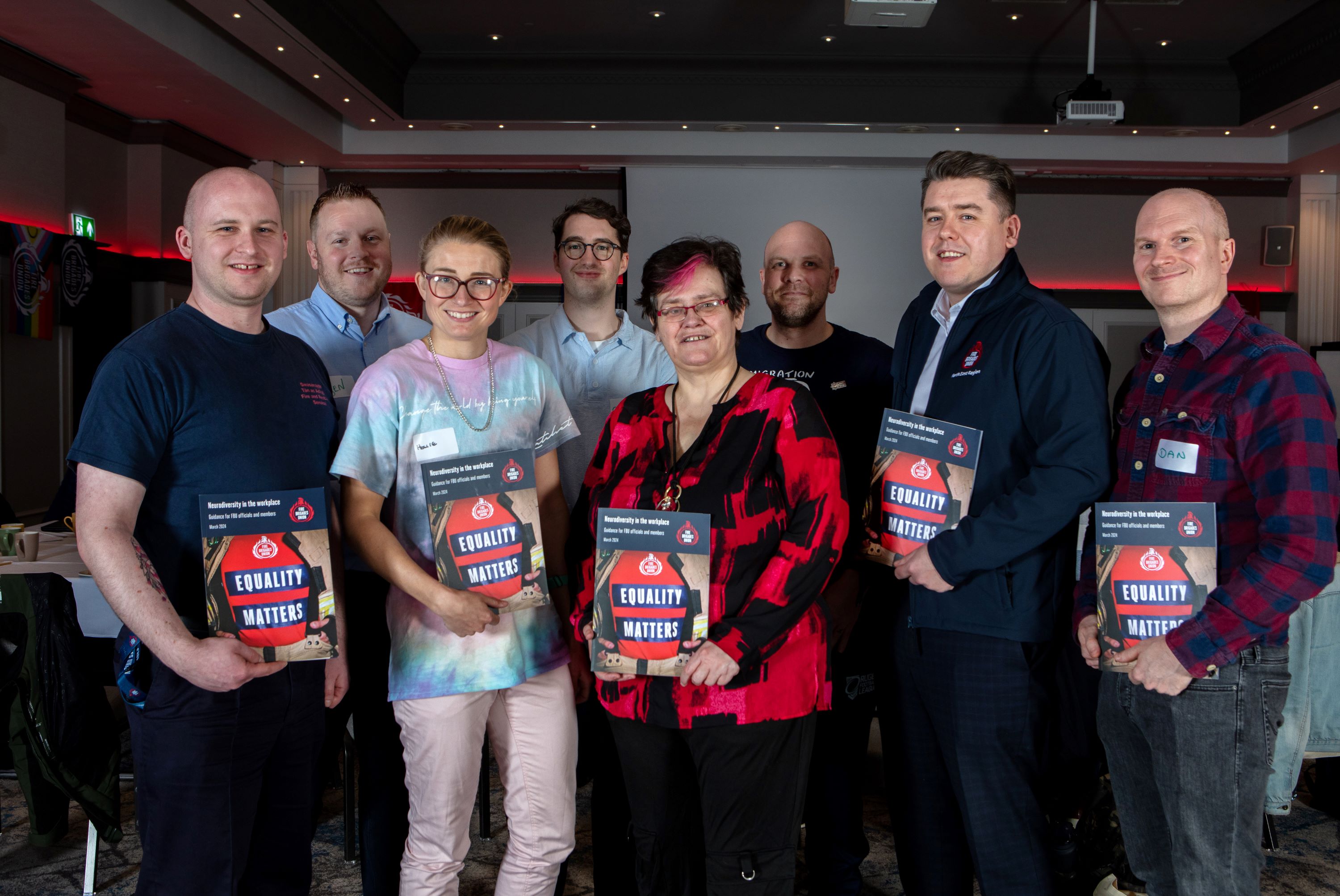
Both reps want to see the union’s work in this area grow and are encouraging FBU members to get involved. After the FBU annual conference passed a resolution to kickstart the union’s work in this area, members and officials developed neurodiversity in the workplace guidance.
This was launched at the first disabled and neurodivergent members’ forum in March 2024, when members came together from across the country to share challenges and start organising.
“We know the fire service has a higher proportion of neurodiverse people within its ranks than a lot of other sectors,” says Dan McNulty. “So while you may think it’s not affecting you, the chances are it’s affecting someone on your team or within your group.”
■ The next FBU disabled and neurodivergent members’ forum will take place on January 29–30 in Leeds. Apply before 20 December: bit.ly/fbu-DND-forum