October is Black History Month, a time in which people come together to celebrate the incredible contribution of people from the black community and to reflect on our shared history. These extracts from FBU history record the life of one notable black firefighter, George Arthur Roberts, a pioneering FBU member and a fantastic role model for all future generations of firefighters.
George Arthur Roberts BEM, MSM (1891-1970), was called up to serve in the First World War in 1914. Originally from Trinidad, he was the first black man to join the Middlesex Regiment. Serving as a rifleman, he fought and was wounded, first at the Battle of Loos on the western front in France in 1915, and then in the Battle of the Somme in 1916.
He was awarded the Meritorious Service Medal, usually given to non-commissioned officers of the British armed forces for distinguished service or gallantry.
After being demobbed in 1919 he became heavily involved with the post-war welfare of soldiers and campaigned on behalf of The National Federation of Discharged and Demobilised Sailors and Soldiers, going on to found a local branch of the British Legion. He led thousands of ex-servicemen in a march demanding improved rights and higher pensions.
After the war he settled in South London where he earned a living as an electrician, a trade he had learnt in Trinidad, but found himself up against the bigotry that he and other black people were subjected to in their day-to-day lives, war heroes or not.
In response, in 1931 he became one of the founder members of the League of Coloured Peoples, the era’s most influential civil rights organisation and one of the first organisations to focus on the needs of Britain’s black community.
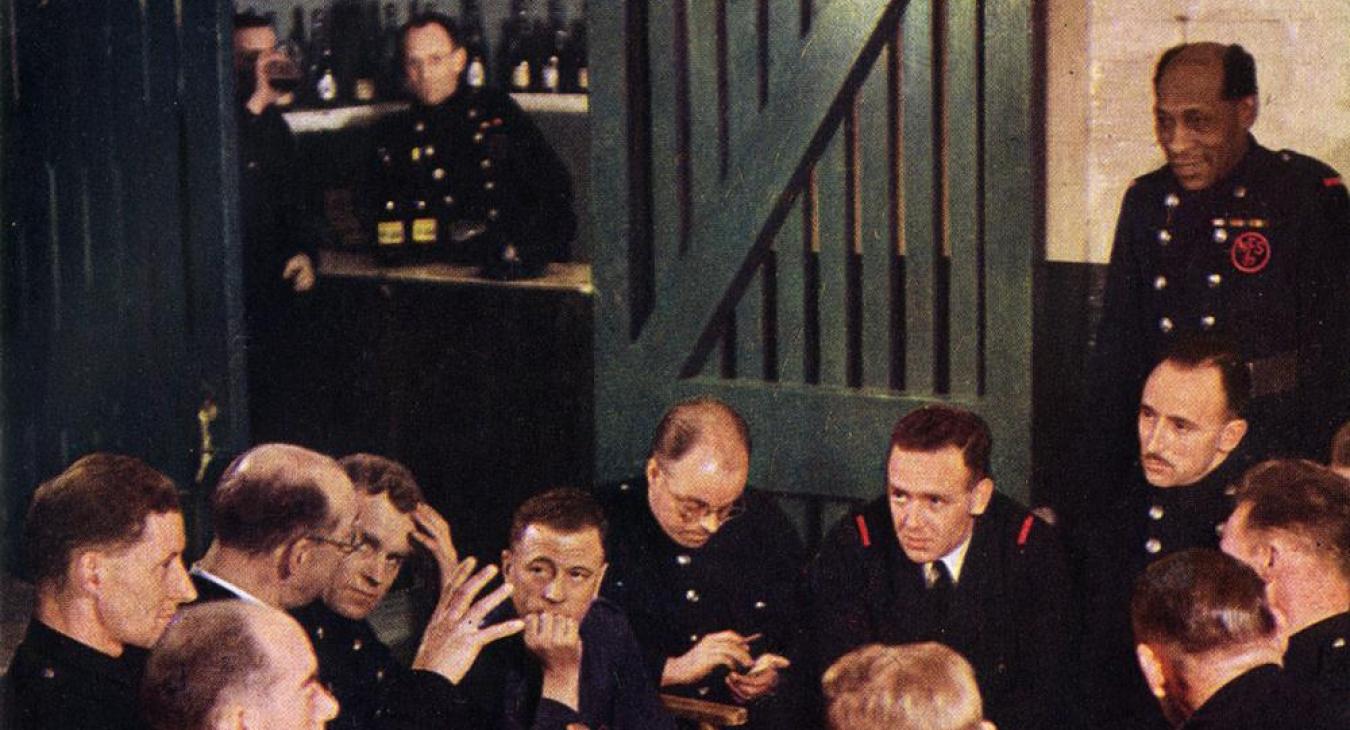
Aged 50 at the start of WW2 and too old to re-enlist for combat, he joined the Auxiliary Fire Service and was stationed at New Cross fire station in South East London from 1939, where he served throughout the Blitz and the rest of the war.
In 1943, George was made a section leader and in the King’s 1944 Birthday Honours was awarded the British Empire Medal “for general duties at New Cross Fire Station” and for his part as a founder and pioneer of the Discussion and Education groups of the fire service, a government-inspired effort at consciousness-raising, during his time in the fire service.
The Regional Civil Defence commissioners informed George of the award of his British Empire Medal – “in recognition of your exemplary conduct”.
“If what I am doing can assist in some small way to bring about a better understanding and a true fellowship amongst the peoples of the earth, I shall be extremely happy.” - George Roberts on the BBC’s CALLING THE WEST INDIES in 1947.
After his death in 1970, he became a largely forgotten figure, until interest in the pre- Windrush generation of black migrants began to surface over a decade ago and he is featured in Stephen Bourne’s book Black Poppies – Britain’s Black Community and the Great War, the story of men of the “old British Empire” who regarded joining the war effort as a matter of honour.
On 11 September 2016, in a scheme led by the Southwark Heritage Association, a Blue Plaque was erected in his honour, as the first black man to serve in the army and fire brigade. The plaque is on the Lewis Trust Dwellings in Warner Road, Camberwell, in the London borough of Southwark, his home until he died in 1970.