In the early hours of Sunday 12 June, 29-year-old Omar Mateen walked into the gay nightclub Pulse in Orlando, Florida and slaughtered 53 people. The fun sound of laughter, music and clinking drinks was silenced by chilling screams before the constant sound of ringing mobile phones filled the club. Calls from people desperately trying to contact their loved ones, calls that would go unanswered.
One police officer at the scene said the dozens of ringing phones coming from the dead bodies was “one of the worst sounds I’ve ever heard”.
The attack on the Pulse nightclub was the deadliest mass shooting and the worst violence against LGBT people in US history. Firefighters were the first emergency responders on the scene, which is unusual for a mass shooting. Just 300 metres from the club lies Orlando’s Fire Station 5, a small, smart, 1950s era station that houses one appliance. Patient zero, the term given to the shooter's first victim to be identified by the emergency services, showed up outside just minutes after the shooting began with five gunshot wounds.
Ron Glass, president of the International Association of Fire Fighters (IAFF) in Orlando, a sister union to the FBU, said that from then on they were so quickly overrun that firefighters had to begin treating the victims on the station.
SHOOTER STILL ACTIVE
“They couldn’t sit back and wait,” says Glass. As reinforcements from Orlando’s central fire station were making their way to Pulse they were passed by a half dozen police cars. The implication was clear – the shooter was still active.
The Orlando Fire Department is no stranger to dealing with the fallout from shootings. In its medical responding role, the department is in charge of the city’s ambulance fleet and they are often called out to respond to such events.
But they are almost always isolated incidents and after the fact (i.e. the shooter has fled the scene).
Victims were colour coded according to their injuries. Red in the most serious cases, yellow for those requiring medical treatment but who were not in a critical state and green for those with minor injuries. The dead were marked black.
“Our guys would never have been asked to go into the club, knowing that the shooter was in there. We’re just not trained for that,” says fire department district commander Bryan Davis, who was in charge of the rescue operation. “What we do is triage, treatment and transport.”
As firefighters set up the three staging areas to get this work under way, they had to make the call on who would be transported to hospital for emergency treatment and who would not.
Victims were colour coded according to their injuries. Red in the most serious cases, yellow for those requiring medical treatment but who were not in a critical state and green for those with minor injuries. The dead were marked black.
There was a lull in rescue operations as Mateen, who had holed himself up inside the club with hostages, indicated to police that he had rigged the club with a bomb.
Firefighters had to move patients out of the newly extended hot zone and set up new staging areas. After a tense stand-off, a SWAT team stormed the building and shot Mateen dead at approximately 4:30 am. Firefighters resumed a final round of triage, treatment and transport and were there for up to 12 more hours securing the scene.
AFTERCARE FOR FIREFIGHTERS
“While we have spent many hours preparing for this type of incident, training scenarios will never replicate the horrific scene our members encountered,” Glass says, outlining how aftercare of the firefighters involved is now a top priority.
The IAFF has sent in a team of five peer support advisers to Orlando, including two New York City Fire Department firefighters who had responded to the 9/11 attacks. The emphasis is to be supported by someone who has dealt with a similar, traumatic event and who knows exactly what the person affected is going through.
It is natural for firefighters to re-run the incident and question whether they made the right decisions.
For Glass, however, there is no doubt. “Everyone pulled together and gave an amazing response, once again protecting their community with great pride and a strong sense of responsibility.”
Davis agrees – his crew performed to the best of their abilities. Strong leadership and great teamwork are vital when responding to atrocities like the Pulse club attack.
Pushed as to what improvements could be made, Davis says that, on reflection, communications between different agencies, particularly law enforcement could be improved with more face to face contact between senior police officers and firefighters. “In big incidents, face to face contact can be useful to quickly pass on a lot of intel,” he says.
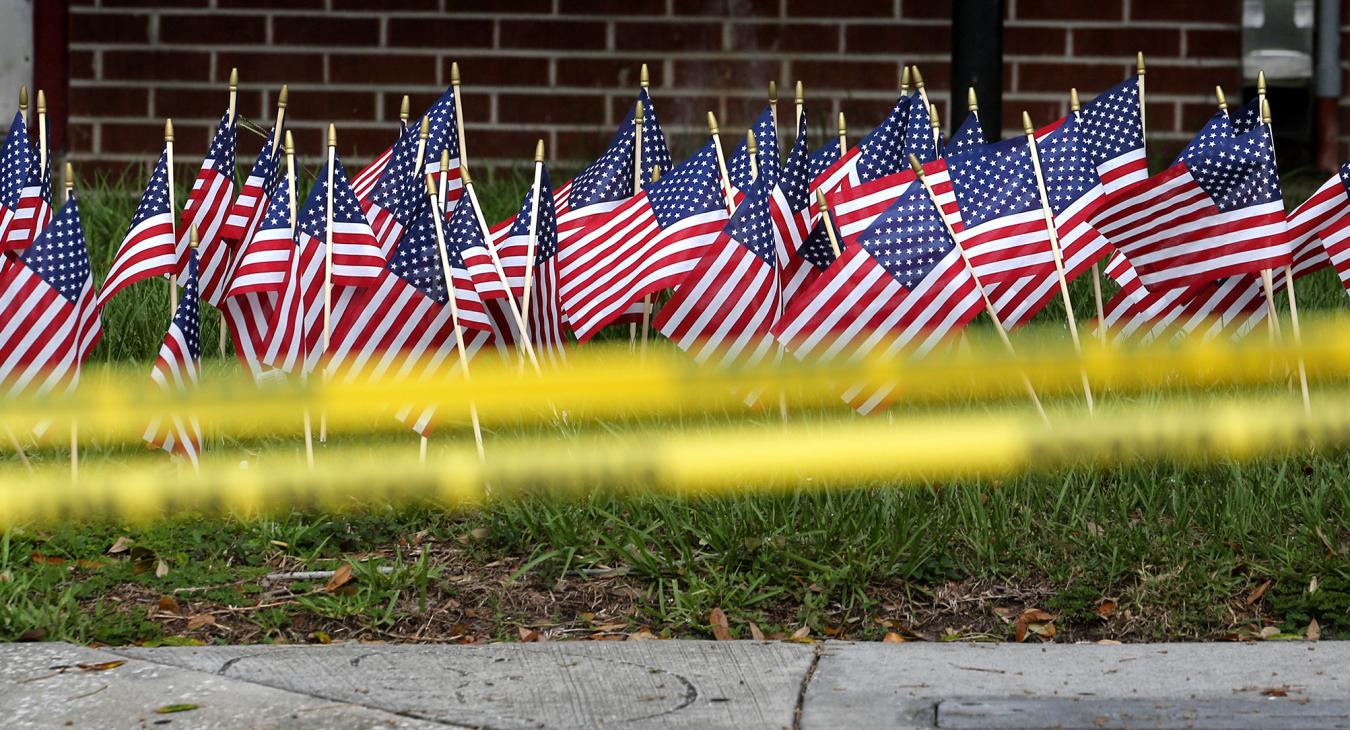
A day after the shooting, 53 American flags were placed on the green lawn in front of Fire Station 5 – one for each victim of this ghastly crime.
One silver lining of a very dark cloud – patient zero survived. All thanks to the heroism and speedy response of the Orlando Fire Department.
Firefighters may not feature prominently in the news coverage of these type of events but they are always there serving their communities with distinction and pride.