Riccardo la Torre reflects on this year’s TUC congress and Labour conference, and explains why the FBU gets stuck in
Politics intervenes regularly in our work. Cladding fires, including the Grenfell Tower fire are occurring because ministers scrapped regulations which kept people safe. Firefighters have to attend fires with too few people on an appliance because of political decisions. So the FBU intervenes in politics, too, and doing this effectively means building alliances with other unions. Every September, we attend the conferences of the Trade Union Congress and the Labour party to push the FBU’s agenda – as determined democratically by you and the representatives you elect.
TUC CONGRESS
The TUC represents 5.5 million workers and its annual congress is its highest body. Delegates from each affiliated union – including the FBU – speak and vote on motions, which become the policy of the TUC.
This year, Congress was in Brighton between 8 and 11 September. It was the first time since the general election that the trade union movement had met. The FBU proposed two motions, both of which passed.
The first was a call for investment in the fire and rescue service, as well as national standards, overseen by a statutory body, and a variety of other core demands. The second committed the TUC to pushing Labour to deliver on the New Deal for Working People, and to reaffirming its commitment to the repeal of all anti-union laws.
The congress also heard from guest speakers including the prime minister, Keir Starmer, and the Palestine ambassador, Husam Zomlot.
THE PRESIDENCY
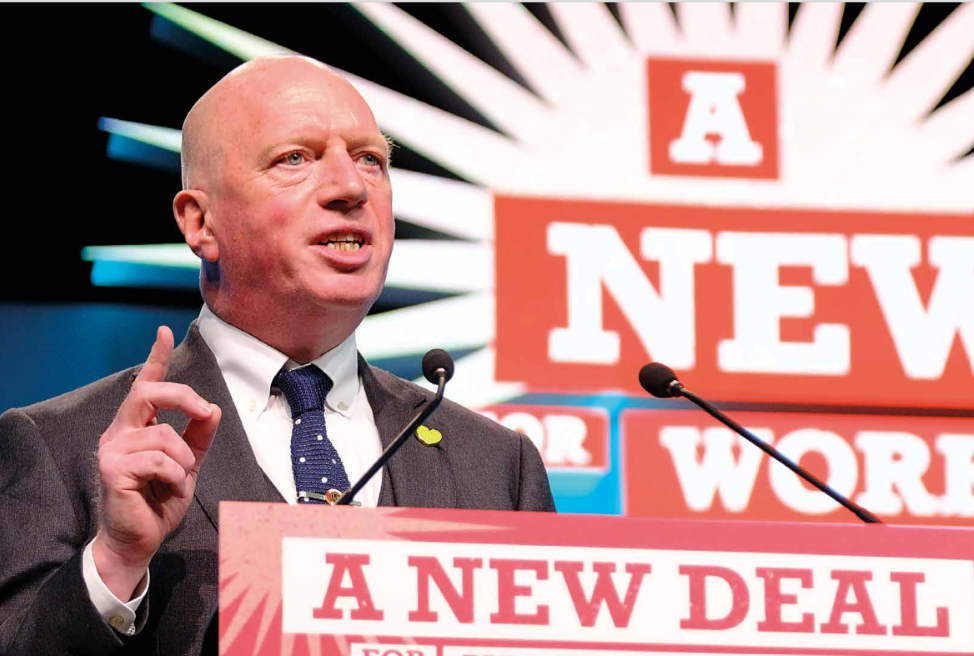
For the first time in almost half a century, TUC congress was chaired by the general secretary of the FBU. Matt Wrack was elected as TUC president last year, and so chaired this year’s congress and the TUC’s other decision-making bodies. In his opening remarks, he focussed on the final report of the Grenfell Tower inquiry, which was published just days before the Congress opened.
“Almost to a man and woman,” he said, “the people entering that inferno that night, risking their own lives in desperate attempts to save others – were trade unionists, members of the Fire Brigades Union and I remain incredibly proud of what they did.”
At the close of the congress, Matt handed over the baton to the next TUC president, Mark Dickinson of Nautilus International, the seafarers’ union.
Labour Party Conference
Tens of thousands of people gathered for the Labour party conference in Liverpool between 22 and 25 September.
The FBU’s intervention was focussed on four key things. First, we fought for Labour to adopt a policy to learn the lessons of the Grenfell tragedy and rebuild the fire service. The passing of our motion means that conference formally called on the government to:
■ Provide sustained investment in local government and the fire and rescue service, including fire inspectors.
■ Ensure building control is only carried out by local authority staff, not private contractors.
■ Bring fire testing and research under public ownership and control
■ Establish a statutory advisory body, including the FBU, to oversee fire safety policy, research, training and guidance.
Second, we united with other unions to push Labour to repair the damage of the last 14 years by fulfilling its promises on workers’ rights. We also supported Unite’s motion to scrap the cuts to winter fuel allowance, which passed. Third, we met dozens of Labour politicians – including mayors, councillors and MPs from all over the UK – to lobby them on our demands for investment, national standards and workers’ rights.
And, finally, we organised and took part in a series of fringe events, including a major discussion of how the labour movement can defeat the far right.
WE STAND TOGETHER
As outgoing TUC president, Matt Wrack addressed the Labour conference shortly before it closed. He used his speech to reflect on the vital role of all workers during the Covid pandemic.
“During that pandemic we saw ordinary people, do extraordinary things. Workers grew the food. Workers transported food. Workers sold the food. And of course, workers delivered our amazing public services.
“Workers got this country through that crisis and workers should never have to pay for crises. That’s why unions make no apologies that we wish to deliver the New Deal for Working people in full and without delay.”
Addressing this summer’s riots, he said: “Our message is that we stand together – that we are united regardless of our differences. Our enemies don’t sail the Channel in flimsy boats. They travel the world by private jet and they play financial games with our futures and with the future of our planet.”
VITAL WORK
The fire and rescue service is a public service. The money that funds us – that pays for our wages, pensions, equipment and training – is controlled by politicians. However your own service is governed by politicians: commissioners, councillors or mayors.
We attend conferences like Labour and TUC to fight for our profession and for a better world. Our long history shows that, however far off it may seem from the realities of frontline firefighting, this work is vital.